Many years ago, when I was the company Historian for Levi Strauss & Co., I used to go to paper and ephemera shows all over the Bay Area. I always found photos, postcards, ads, or other great swag from Levi’s early years. And it was at one of these shows that I met the king of vintage postcards: Ed Herny. He’s written many works of history and is the president of the San Francisco Bay Area Postcard Club.
I rarely make it to the paper shows these days, but when I do, I always see Ed. And over this past weekend I saw him again at the Sonoma County Finding History Day event in Santa Rosa. I was setting up my table, representing the Tomales Regional History Center, when Ed walked by. He said he had something for me; he reached into the pocket of his aloha shirt, and pulled out four postcards.
Four dude ranch-themed postcards.
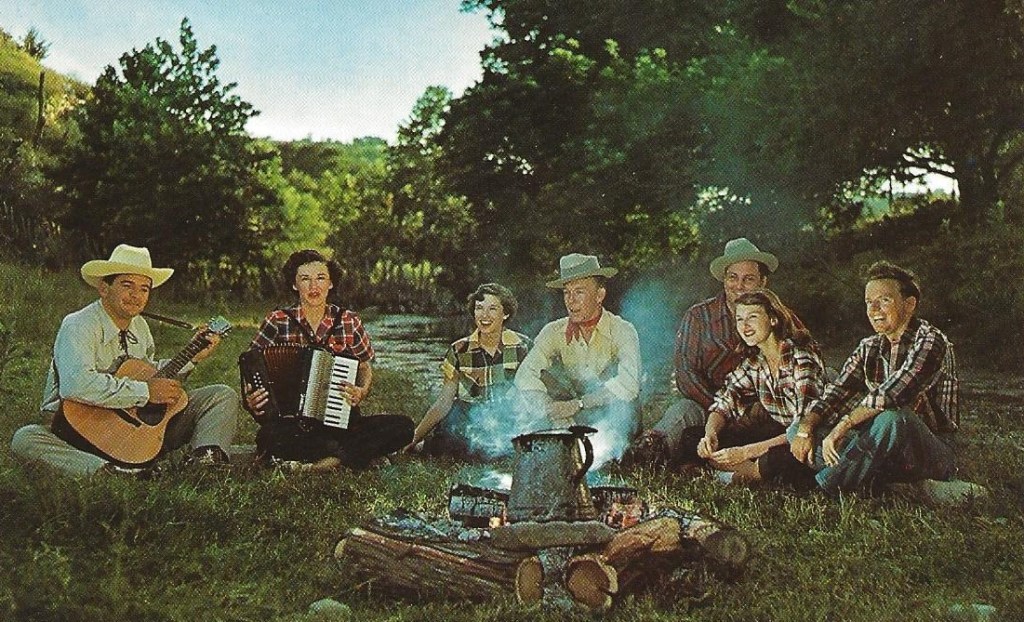
Each one was a treat. The photo on the card at the top of this post was taken by someone from the Texas Highway Department, and captioned simply: “Campfire At Twilight on a Dude Ranch,” printed in 1959.

The oldest card, from 1901-1907, was of the Square G Ranch in Wyoming, which was actually a tourist camp, rather than a dude ranch. Some of the buildings were repurposed in the 1960s for tent camping.
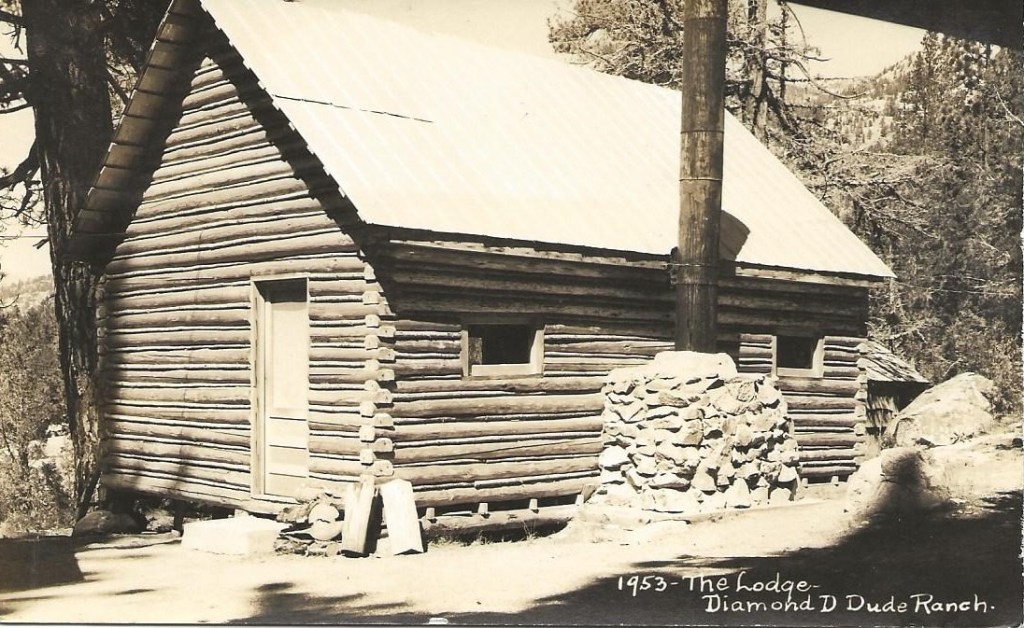
Doing research about the Diamond D card was fun. The ranch was near Lakeshore, California, in Fresno County. It also skirted the definition of a dude ranch; some of its advertising told potential guests to “…bring your own sleeping bag or bed roll–we furnish the rest.” But calling the place a dude ranch definitely brought in more customers, and this card was posted from Don to Greta in Ketchikan, Alaska in 1945.
My favorite of all four cards was printed by the Burlington Northern railroad, sometime around World War I. I love it because of the language on the front:
A “Dude” Ranch in the Big Horn Mountains of Wyoming — Where Eastern City Men Live at the Homes of Ranchers, Become Cow-Boys on Their Vacations, and Enjoy Outdoor Life Par Excellence, on Horseback, While Improving Physically
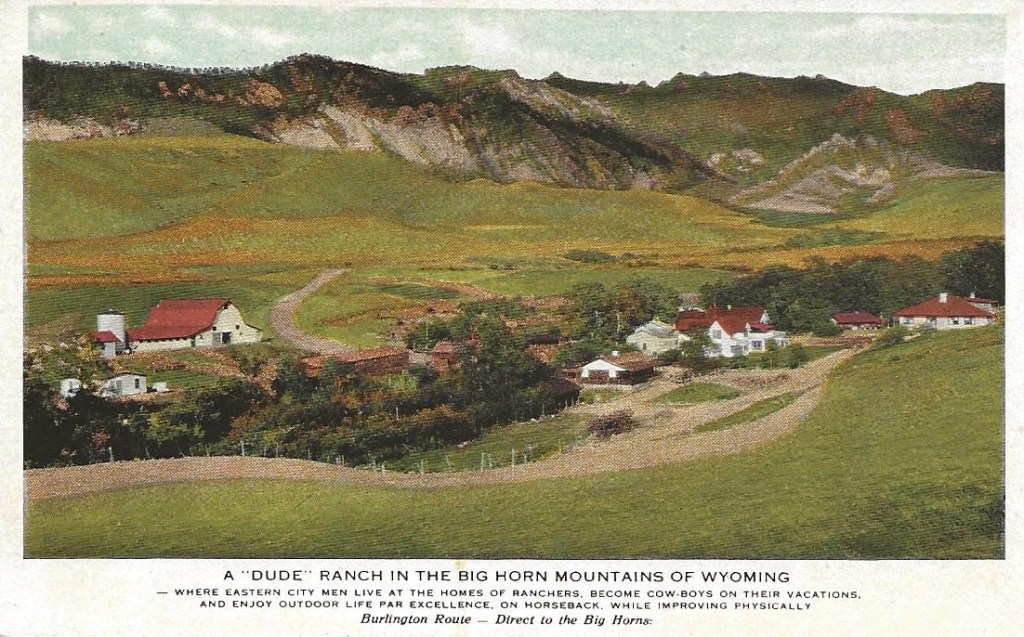
Whoever was in charge of marketing at the railroad knew just what to say: that’s the perfect description of a dude ranch in the early years of the 20th century. (This might be Eatons’, near Wolf, Wyoming.)
These four cards are now in my ever-growing collection of dude ranch ephemera.
And all thanks to Ed.
 Tumblereads: A New Twist on the Old West