Happy New Year, and I hope you will all indulge me as I devote the occasional post to the man who will star in my next book: Frederick Wadsworth Loring, the Harvard graduate, poet, novelist, and journalist who left his comfy home in Boston to be the secretary for the George M. Wheeler survey of the West from May-October of 1871. He was also a journalist on assignment for the magazine Appleton’s Journal. He died in the stagecoach attack known as the “Wickenburg Massacre” on November 5 of that year.
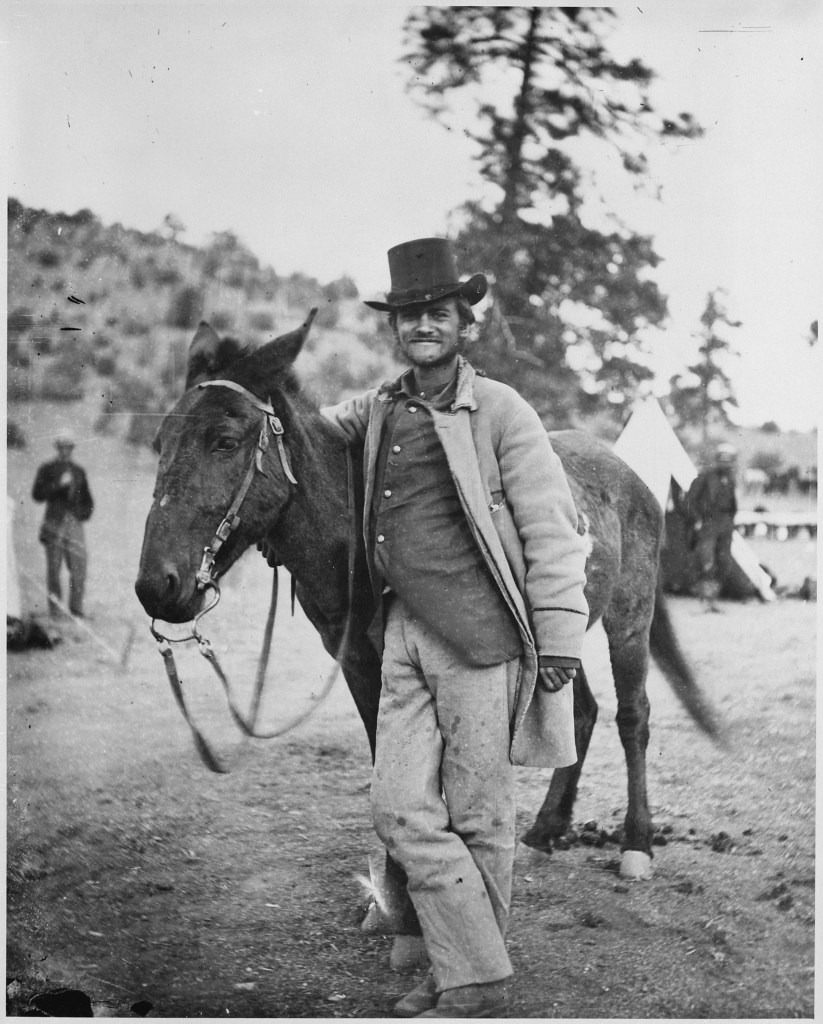
Today, he’s only thought of as a victim; at the time, some newspaper reporters even called the attack the “Loring Massacre,” because he was so well known and was from a prominent family. But for the last twenty years, since my first visit to Wickenburg and first hearing his name, I’ve been following Fred’s trail as a writer and explorer.
I’m fascinated by what happens when the West meets what is not the West. The collision always creates something new. For example, the dude ranch. Men from the East and Midwest started up the first dude ranches in Montana and Wyoming; the blending of eastern vacationers with the glories of the western landscape and the storied life of the cowboy spawned a business that is still strong 140 years later.
Fred Loring stepped off the transcontinental railroad in San Francisco in April of 1871 and joined the Wheeler expedition in Nevada that May. From the moment he came West, his life and his writing changed, became something new, but only for a sad, short time. He died at age 21, and by the time I finish my book, I’ll have spent 21 years looking for and writing about him, and having adventures of my own.
So, for this first post about the man whose friends called him “Earnest, brave, persevering, full of zeal for his vocation,” I want to go all the way back to October of 2015, when my fellow desert rat friend Mark Yateman and I jumped into his Land Cruiser and traced Fred’s footsteps on the Wheeler expedition around the state of Nevada.
Because so many government documents are now available online, I was able to download a copy of Wheeler’s report, so I knew the complete itinerary. I mapped out our route, made hotel reservations, and flew to Las Vegas to meet Mark and start our journey. I kept a journal during the trip, and pasted inspiring images on the inside cover, as well as a photocopy of the famous picture of Fred with his mule, Evil Merodach.

I wrote down a list of the places that Fred visited or trekked through, and we went to most of them: Belmont, Virginia City (on Halloween!), Battle Mountain, Carlin, Halleck, Eureka, Pioche, and Pahranagat Valley. We also went to Elko, which was a train stop on the way to San Francisco, and many other towns and ghost towns that we happened to pass through.
Anyway, the one story I want to tell you today is about the side benefits of doing research, and the kindness of strangers.
After we left Elko, we headed to where old Camp Halleck used to be, now just a turnoff from Highway 80. Founded in 1867, this army post was the headquarters for the Nevada Military District. Wheeler was a Lieutenant in the U.S. Army and the expedition stopped at official forts whenever they were in the area.
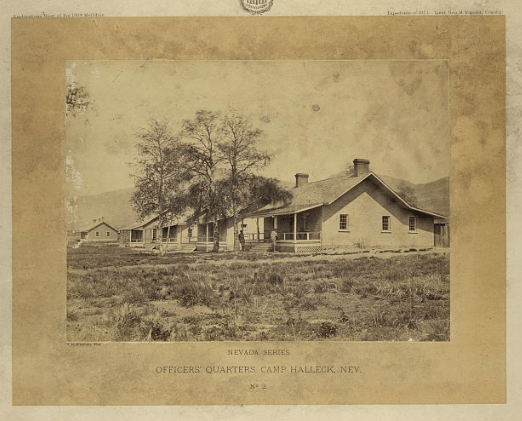
While on this trip, I dubbed Mark “The Ghost Town Whisperer,” because he could find places that were not on any map (which was miraculous to me, because I am so directionally challenged I can get lost in my own town.) We knew that there was nothing left of Camp Halleck, but wanted to see the general area. It didn’t take long for him to find a historic marker.
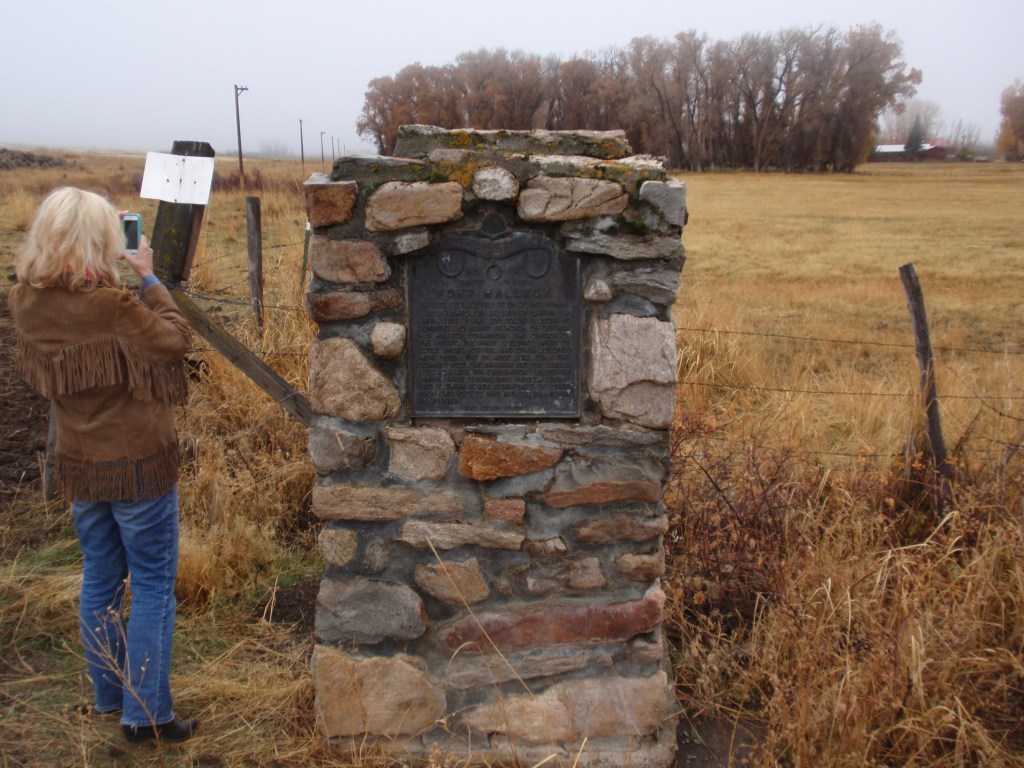
We then noticed that we were near a road, at the end of which was a house and corral. There were people milling around, and a very large truck nearby into which some men were loading cattle. “Let’s go see if they know anything,” said Mark, so we jumped back into the Land Cruiser, drove down the road, parked a respectful distance away, and got out.
After a few moments one of the men noticed us, we waved and smiled, and he beckoned us over. Ever the nerd, I said something like, “Hi, we’re historians and we’re looking for old Camp Halleck. Are there any remnants left of the old fort?”
He took off his hat and pointed to a gate on our left, which opened onto what looked like a vast field of trees and bushes.
“Well, the fort’s old cemetery is over there on my property. Go on through the gate, keep driving, and you’ll see it.”
We thanked him, drove through the gate (closing it behind us) and just a short distance away we saw a modern fence and sign: “Fort Halleck Cemetery, Est. 1869.”
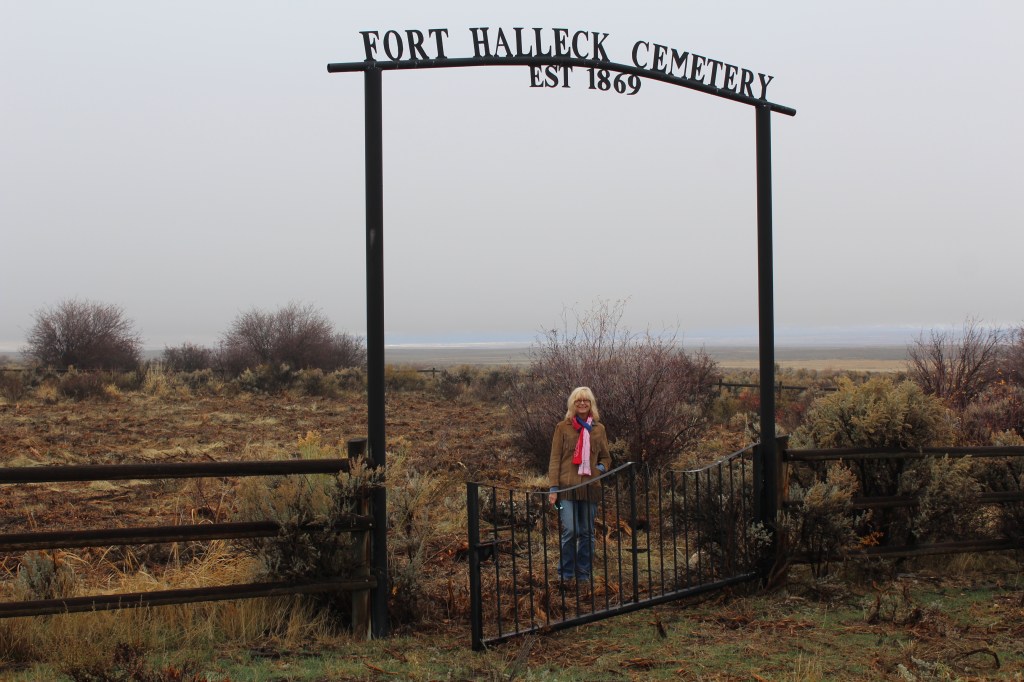
Whatever graves had been there were long gone, except for one lone marker. I walked the perimeter of the fence and found what had been an old wooden enclosure; the rancher’s family had put up the modern iron railings and sign. We also wandered around the area while a barn owl hooted in a nearby tree. ”Fred was here,” I kept saying to myself. We then left through the gate again, thanked the rancher, and headed to Elko, our next stop.
I’ve lost count of the number of times serendipity has played a part in my life as a historian. If that rancher hadn’t been loading cattle, if he hadn’t even been home, we would never have seen the cemetery, and I would not have put my cowboy boots on the ground in Fred’s footsteps. Not only that, here we were, two strangers, and this man let us walk around on his property because we were interested in something that was obviously important to him. It was legendary western hospitality personified.
The rest of the Nevada trip was equally fun, serendipitous, and instructive, and I’ll tell more stories in this blog now and then. I also plan to take on the California and Arizona portions of Fred’s trek this year, while I put his life on paper.
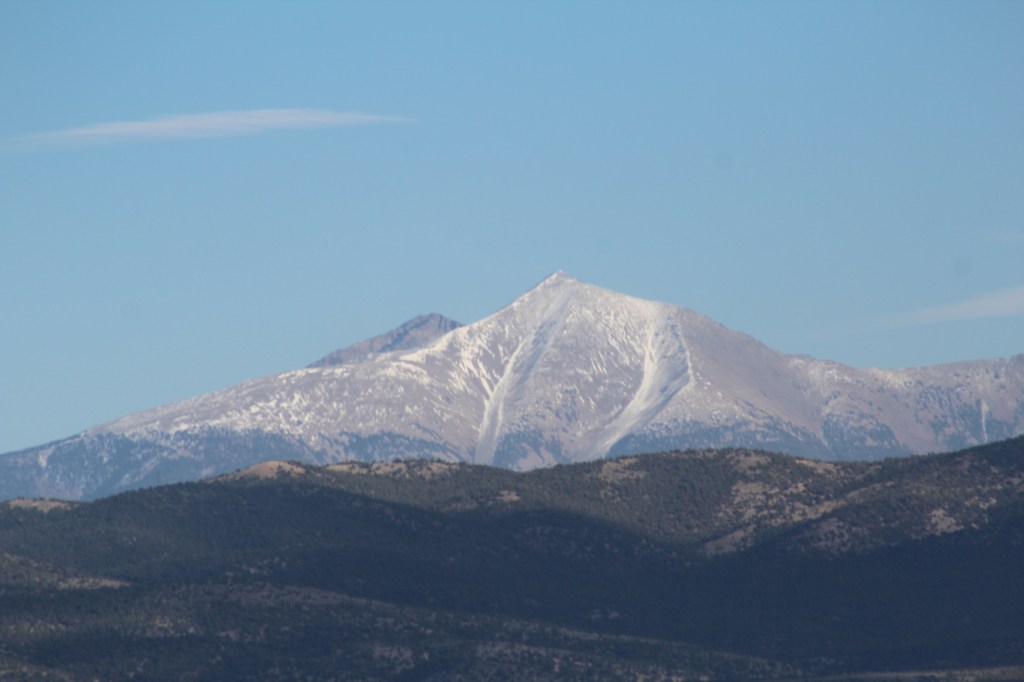
Wheeler Peak, White Pine County, Nevada


I look forward to future reports about Fred!
Janet
LikeLike
Thanks, Janet!
LikeLike
Hi Lynn!
Serendipity does indeed favor the curious and determined historian! We had a similar experience in Cholame, CA, where I was searching for where Sara and JG Lemmon homesteaded. The ranch foreman happened to be driving out the gate when we’d paused at the driveway entrance, and when I told him what we were interested in, he gave me the ranch owner’s number. The owner was so pleased I actually asked permission (rather than just climbing over his fences), he gave me the number of his former ranch foreman, who happens to be a local historian. He dropped everything he was doing and appeared 30 minutes later, and he drove us all over the property — thrilling! No, we didn’t find any artifacts from the Lemmons’ stay (although I certainly looked hard!), but it was magical knowing I was standing exactly where they built their cabin!
Happy New Year to you too! Any chance you’ll be at the Tucson Festival of Books this year? I plan to volunteer at the WWW tent …
Cheers,
Wynne
LikeLike
Wow, what a great story, thanks Wynne! I will be at the Tucson Festival of Books, so I’ll see you in the WWW booth (and likely elsewhere).
LikeLike