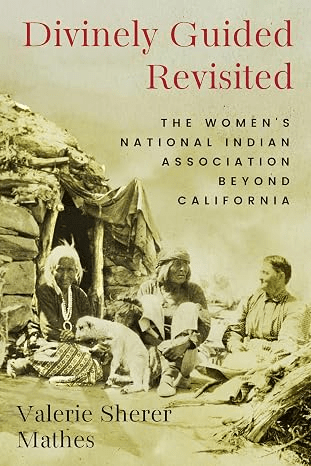
I’d like to introduce you to my friend Valerie Sherer Mathes, author of the new book, Divinely Guided Revisited: The Women’s National Indian Association Beyond California, which came out earlier this year. Val is a professor emeritus of City College of San Francisco and has been researching and writing on the Women’s National Indian Association (WNIA) for four decades.
The majority of her twelve books deal with WNIA history, beginning in 2012 with the publication of Divinely Guided: The California Work of the Women’s National Indian Association. Others include two anthologies on the WNIA, and a biography of Amelia Stone Quinton, an association founder. Four other books, two co-authored, relate to Helen Hunt Jackson’s Indian reform legacy. Val is also the author of Images of America: Sonoma Valley.
We sat down this summer for a chat about her new book.
How did you discover the Women’s National Indian Association?
I wrote my dissertation on Helen Hunt Jackson’s role as an Indian reformer. Once I had included everything that I knew about her Indian work, it was too short. I added the role the four major Indian reform associations played in expanding her legacy. The Boston Indian Citizenship Committee, the Indian Rights Association (IRA), and the Lake Mohonk Conference of the Friends of the Indian supported her legacy, but the WNIA did the most. The group founded a missionary station among the Mission Indians, naming it the Ramona Mission in honor of her Helen Hunt Jackson’s California novel, Ramona.
Jackson, unlike reformers who followed her, was not a proponent of Indian assimilation. Instead she was intent on protecting the land base of the Mission Indians, respecting the role the Catholic Church played in their lives. The WNIA and male reformers were mostly Evangelical Protestants, distrustful of the role of the Catholic Church, and more interested in turning Indian men into farmers and their wives into Victorian housewives. They promoted Christianization and allotment, the redistribution of communal held lands.
Give me a bit of background on the WNIA.
The WNIA was born in May of 1877 within a women’s home missionary society in Philadelphia’s First Baptist Church. It disbanded in 1951. The primary leaders were Mary Louise Bonney, founder of the prestigious Chestnut St. Seminary in Philadelphia, and Amelia Stone Quinton, organizer for the Brooklyn Branch of the Woman’s Christian Temperance Union. The WNIA initially engaged in massive petition drives, urging the protection of Indian lands and citizenship and education for them. Beginning in 1883 they began establishing mission stations on Indian reservations across the country, mostly in the West, with more than sixty in total. In the appendix of Divinely Guided Revisited, I provide a complete listing of the stations I have discovered.
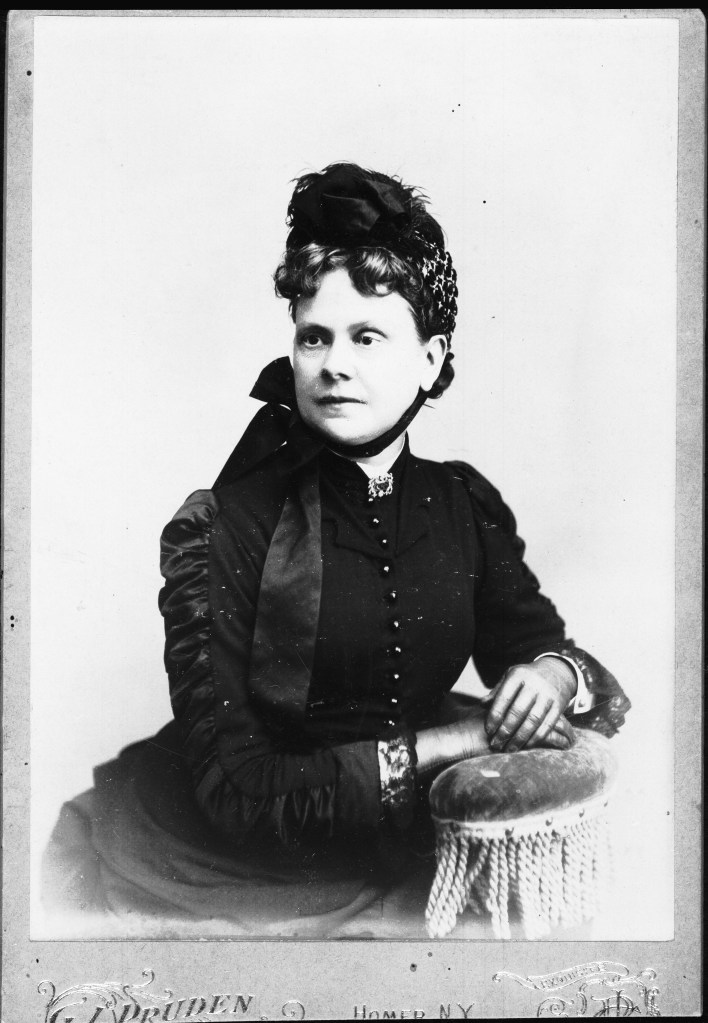
Amelia Stone Quinton
The WNIA, like other reform associations, promoted the government’s ill-conceived policy of assimilation—a concept which was widely accepted by the many Americans at the time. Although viewed today in negative terms, it is essential to avoid applying twenty-first century standards to nineteenth century policies. There are actually a number of positive accomplishments of the WNIA which I have emphasized throughout Divinely Guided Revisited.
Why was the WNIA successful in this male dominated movement?
The most apparent reason was Amelia Stone Quinton, who served as the first secretary, a longtime secretary, and an honorary president with duties. She was the primary organizer of auxiliaries and the author of the petitions, memorial, letters, and pamphlets. She also served as chair of the Missionary Committee, determining the direction of their work and at times served as editor of their monthly magazine, The Indian’s Friend. Her oratory skills were legendary, and her persuasive skills were equally as impressive.
The WNIA also appointed an all-male advisory board of the most prominent humanitarians, reformers, and government officials of the day. These included Rev. Lyman Abbott, Congregational minister and editor of the Christian Union; General Clinton B. Fisk, founder of Fisk University; General Samuel Chapman Armstrong, founder of Hampton Norman and Agricultural Institute; and Henry Laurens Dawes, the senior senator from Massachusetts, to name a few.
The WNIA maintained a cordial relationship with male reformers, especially with the Indian Rights Association, also headquartered in Philadelphia. WNIA members were openly welcomed to the annual Lake Mohonk Conference because founder, Albert K. Smiley, a Quaker following the dictates of his religion, viewed women as equal in the eyes of God.
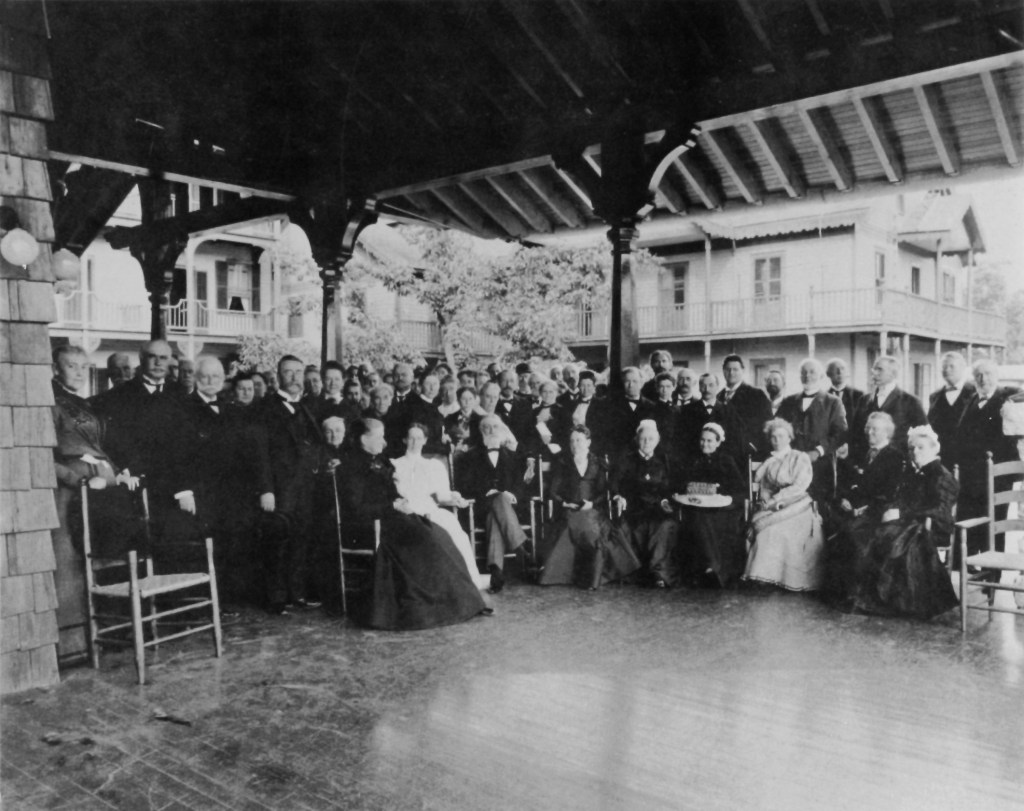
1899 Lake Mohonk Conference
Another reason was The Indian’s Friend, founded in 1888 and lasting until 1951. It was open to reformers from all associations.
And finally, the WNIA succeeded because the environment in which they were working was dominated by Christian principles. All reformers, whether men or women, shared the same goals, albeit ones that were destructive of both Indian culture and their land base.
What prominent women were members of the WNIA?
Here are a few, including those whose husbands had important occupations. The women came from many levels of American society:
*Abby F. Hamlin Abbott, member of the WNIA executive board and wife of Rev. Lyman Abbot, Congregational minister, author, lawyer, and social reformer.
*Elizabeth Lyman Eliot Bullard (Mrs. Stephen H. Bullard), president of the Massachusett Indian Association, a WNIA affiliate and sister to Harvard’s president, Charles W. Eliot.
*Elizabeth Keller Shaule Crannell, (Mrs. William Winslow Crannell), general secretary of the Women’s Eastern New York Indian Association. She organized and served as president of the Albany Association Against Woman Suffrage and was chair of the executive committee of the Anti-Suffrage Association of the third Judicial District of New York State.
*Caroline H. Dall, literary scholar and women’s rights activist.
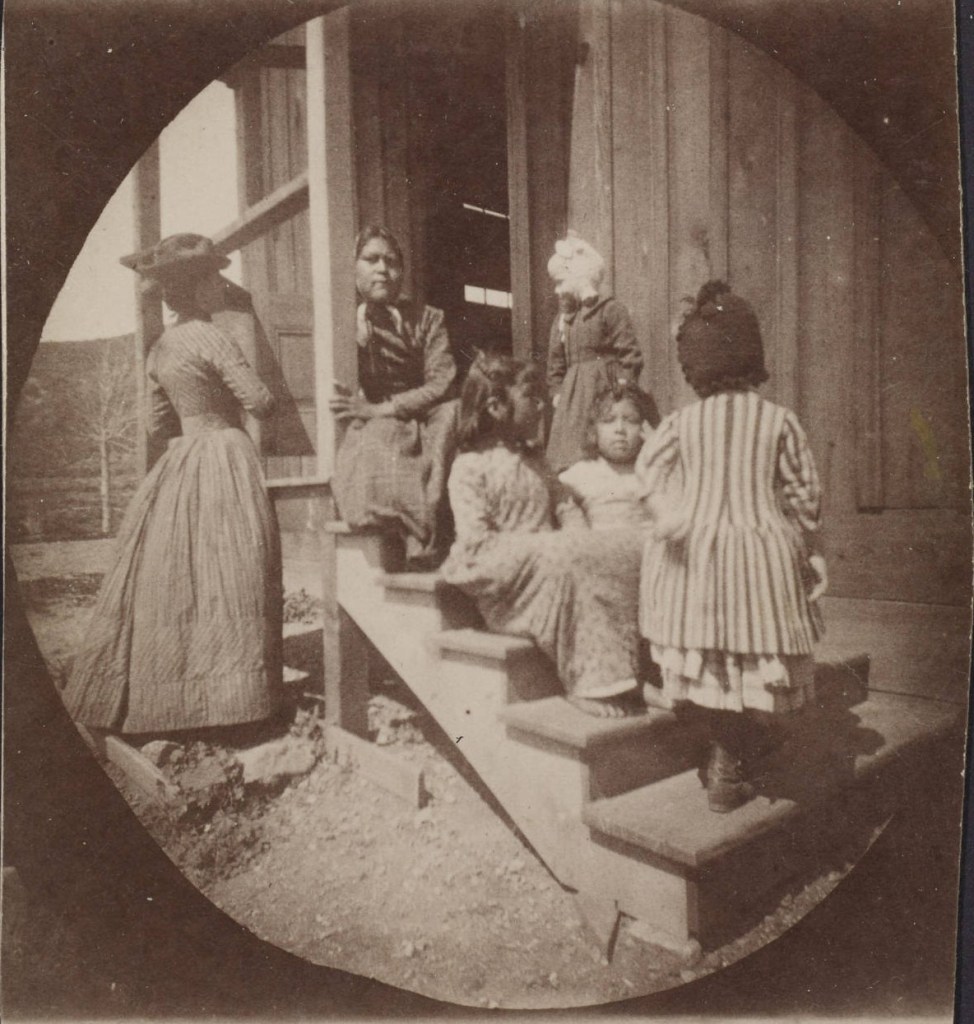
Sarah Elizabeth Morris, pictured here with her students, was a government teacher at the Mission Indian village of Potrero on the Morongo Reservation in Southern California. She also taught a Sunday School. Her work was supported by the Women’s National Indian Association.
*Electa Allen Sanderson Dawes, wife of Massachusetts senator Henry Laurens Dawes. She was president of the Pittsfield, Massachusetts auxiliary and active in the Washington, D.C. auxiliary. A chapter in Divinely Guided Revisited is devoted to a history of this auxiliary.
*Melissa Phelps Dodge, wife of William E. Dodge, a philanthropist, long interested in various reforms, and member of the first Board of Indian Commissioners. With Melissa’s father, he founded Phelps Dodge Mining Co.
*Nellie Blanchan De Graff Doubleday, a scientific historian and nature writer. Her husband, Frank Nelson Doubleday, was a New York publisher.
*Constance Goddard DuBois, novelist, ethnologist, and president of WNIA branch in Waterbury, Connecticut
*Janette Adelaide Crippen Fisk, member of the WNIA executive board and wife of General Clinton B. Fisk, founder of Fisk University and member of the Board of Indian Commissioners.
*Alice Cunningham Fletcher, a prominent anthropologist, the first to work among the Nez Perce Indians.

Alice Cunningham Fletcher
*Elizabeth W. Cope Garrett, original member of the WNIA executive board and wife of Philip C. Garrett, prominent Quaker reformer, Philadelphia lawyer, and member of the executive board of the Indian Rights Association
*Harriet Ward Foote Hawley, the first president of the Washington branch of the WNIA and wife of Connecticut Senator, Joseph Roswell Hawley.
*Sara Thomson Kinney, long time president of the Connecticut Indian Association and member of the Connecticut Societies of the Colonial Dames of America. Her husband, John Coddington Kinney, was editor of the Hartford Courant newspaper from 1872 to 1890.
*Mary Alice Longfellow, president of the Massachusetts Indian Association. Her father was poet Henry Wadsworth Longfellow and her uncle was Rev. Samuel Longfellow, president of the Indian Rights Association’s Cambridge branch.
*Frances Campbell Sparhawk, philanthropist and novelist, and chair of the WNIA’s Indian Industries League.
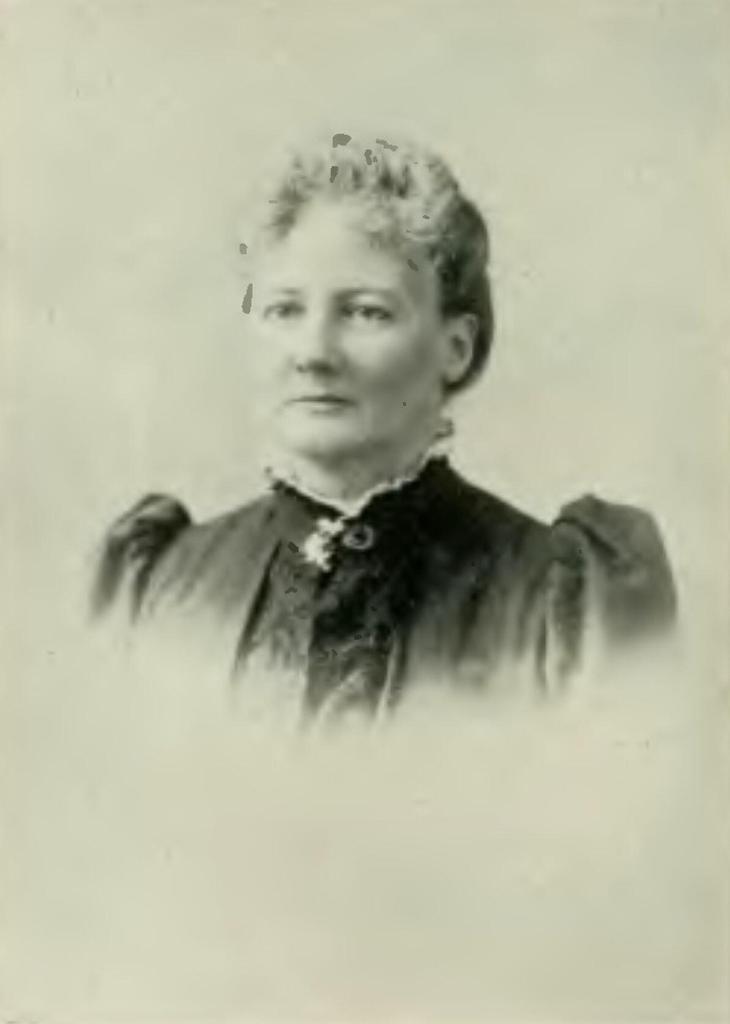
*Annie Beecher Scoville, granddaughter of Henry Ward Beecher, whose sisters were author Harriet Beecher Stowe and educator Catharine Beecher. Annie taught at Hampton Institute and supervised Winnebago and Omaha Reservations.
*Harriet Beecher Stowe, author of Uncle Tom’s Cabin, an honorary vice president of the Connecticut Indian Association
Did the WNIA have any male members?
In a December 1901 meeting, WNIA members voted to change their name to the National Indian Association to encourage men to join. Two are of note. In 1905, John W. Clark, an English Christian worker and lawyer, became general secretary after Quinton retired. In 1909 he took over from her as chair of the Department of Missions, serving until his death in 1927.
When Quinton retired in 1905, Rev. William Brewster Humphrey, financial secretary of the Federation of Churches and Christian organizations in New York City, became president for one year. His wife, Marie Emeline Ives, was a longtime member of the Connecticut Indian Association, chairman of the national Young People’s Department, and business manager and editor of the WNIA monthly, The Indian’s Friend for several years.
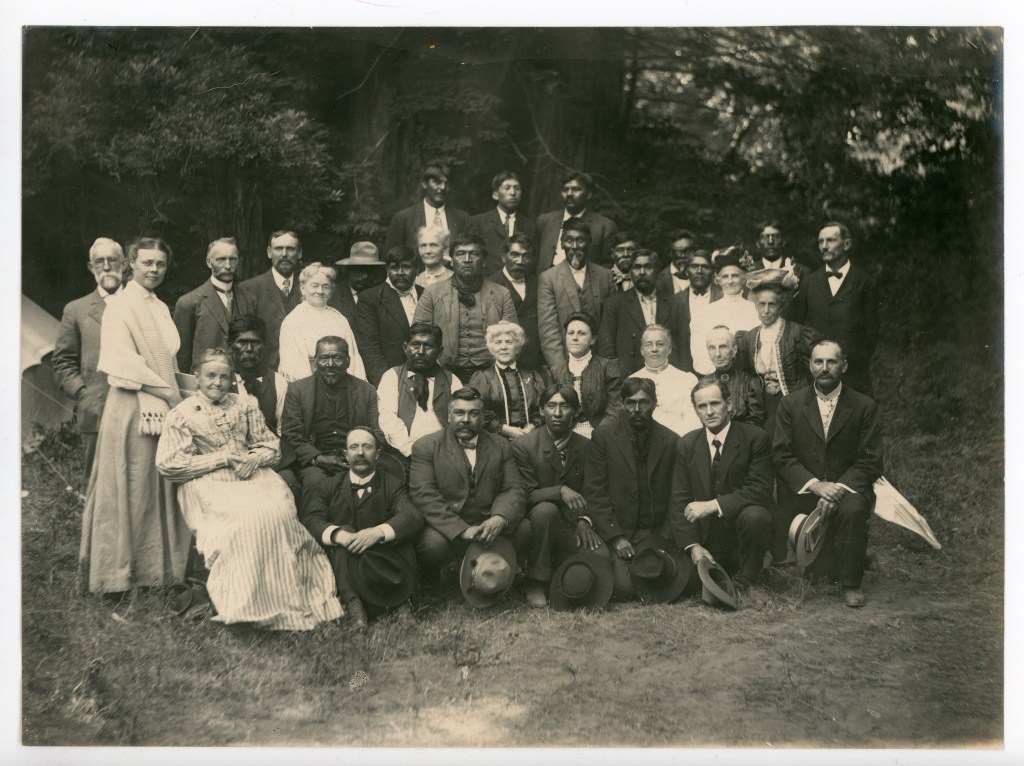
The Zayante Indian Conference, begun in 1906, was a decade-long annual meeting sponsored by the Northern California Indian Association in San Jose, an auxiliary of the Women’s National Indian Association.
How do you defend the WNIA’s assimilationist stance?
As an ethno-historian who has taught history of the American Indians for almost fifty years, I cannot defend forcing one culture to adopt that of another. I have continued my research on the WNIA because I find positive work which I feel should be documented. I have a chapter in Divinely Guided Revisited om Mary Louise Eldridge, a missionary, nurse, and government field matron funded by the Cambridge branch of the WNIA whose work among the Navajo I consider truly heroic.
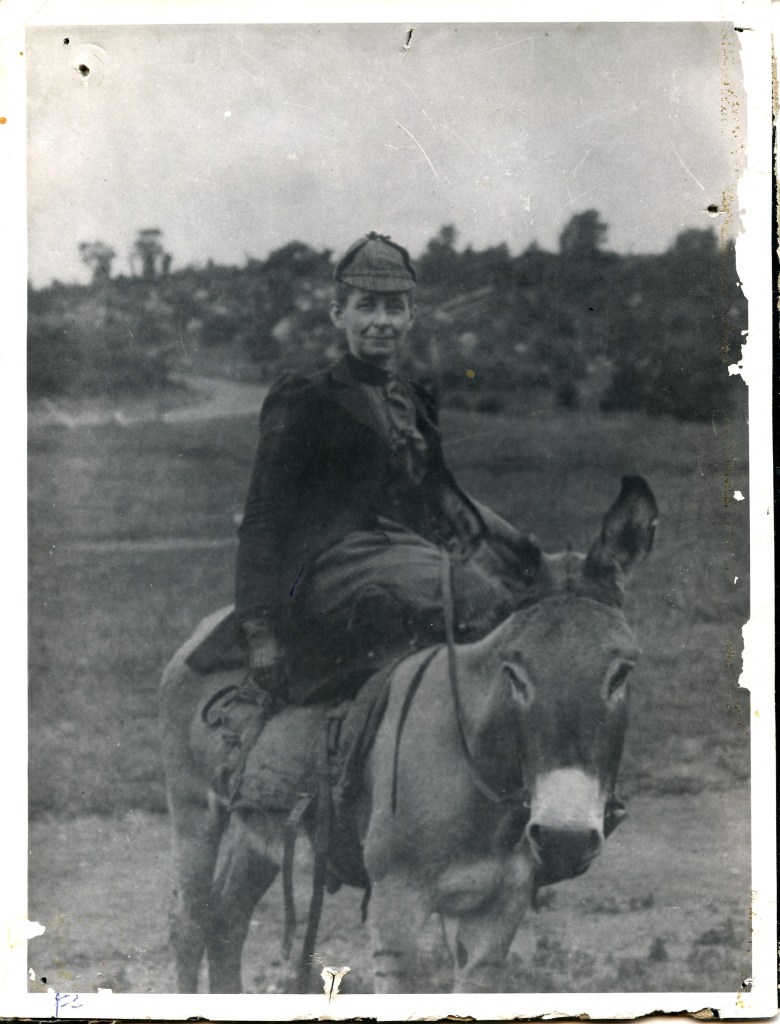
Mary Louise Eldridge
WNIA reformers may have been ethnocentrically biased and maybe even prejudiced, but I am convinced they did not enter the reform arena with malicious intent; they fervently believed in their crusade. After all, they called their work ‘divinely guided.’ There is no reason to paint all reform efforts with the same brush.
And finally, here are a few positive efforts. The WNIA founded two hospitals on the New Mexico part of the Navajo Reservation and sisters Sophie and Margaret Shepard struggled to educate the children of the Chiricahua Apache prisoners of war at Mount Vernon Barracks, Alabama.
The WNIA purchased land for the Florida Seminoles and ran a successful California petition drive which resulted in a congressional appropriation of $150,000 to buy land for various homeless Indian bands in the state.
The WNIA’s Department of Indian Libraries and Industries promoted Indian arts and crafts, and California auxiliaries served as a conduit for the sale of Indian-made baskets with The Indian’s Friend regularly advertising Indian arts.
And finally, are there other similar topics that should be studied and written about?
Yes. Although I have written the history of the California stations, those among the Navajo in the New Mexico Territory of the Reservation, the Piegan station in Montana, the Seminole station in Florida, and a Hualapai boarding school in Arizona, there are many that have never been studied.
In addition, there are many members whose stories need to be told. Although I have a chapter in Divinely Guided Revisited on Dorcas J. Spencer, who was a member of the WNIA and the WCTU, there has been no proper comparison of the work of these associations.
You can find Val’s books on Amazon and Bookshop.org.

