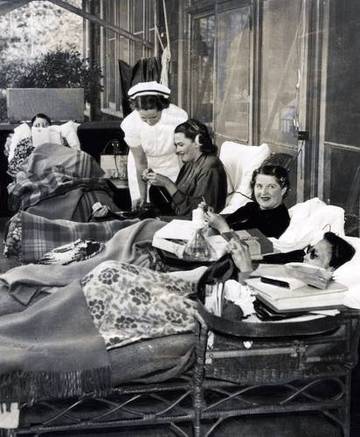
Arequipa patients and nurse, 1940. Courtesy Anne T. Kent California Room, Marin County Library.
On September 9, 1911 — 115 years ago today — the Arequipa Sanatorium opened in the Marin County town of Fairfax, about 50 miles north of San Francisco. Dr. Philip King Brown founded Arequipa to treat women with tuberculosis, and he had a lot of help getting the sanatorium up and running. He couldn’t have done it without the support of women from both the Bay Area and Santa Barbara.
The April 18, 1906 San Francisco earthquake and fire did more than destroy great swathes of the city (as well as the Brown family home). It also created a health crisis; a rise in tuberculosis among the working women who labored in factories, classrooms, department stores, and small shops. This appalling statistic inspired Dr. Philip King Brown to create a place where women could get the treatment they needed.
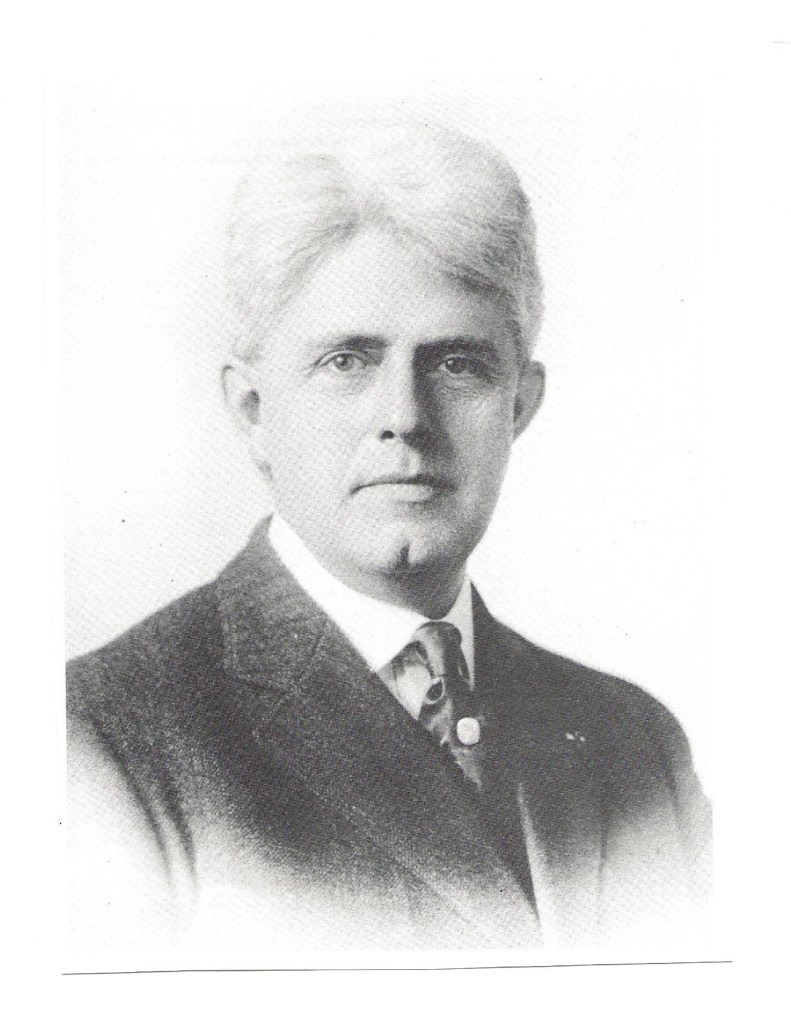
Dr. Philip King Brown. Courtesy California Historical Society.
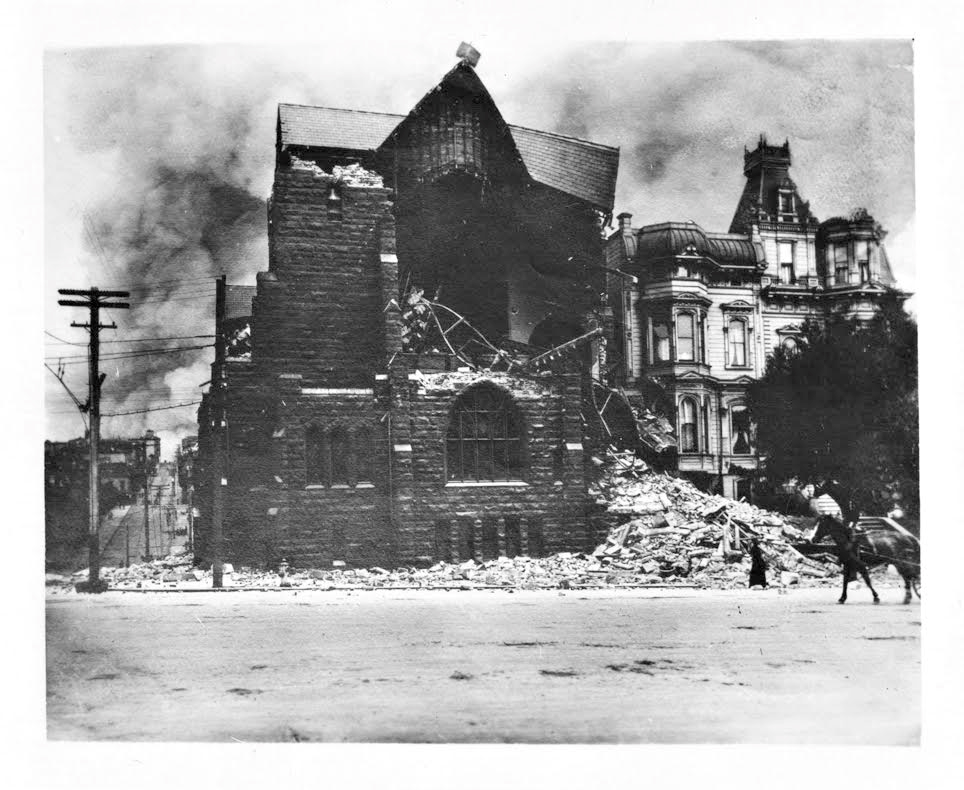
The Brown family’s house on Van Ness Avenue (on right), which survived the earthquake but not the ill-advised dynamiting that followed.
Dr. Brown had connections among the wealthy families of the California, thanks to the work of his mother, pioneering physician Dr. Charlotte Brown. He tapped into this network to help fund his sanatorium: Marin philanthropist Henry Bothin donated a plot of land outside Fairfax, and famed architect John Bakewell drew and donated the plans for the building. But Dr. Brown still needed money for construction, beds, medical supplies, a kitchen, dairy, and salary for a superintendent. So he turned to the group that had given his mother the most help when she founded her Pacific Dispensary for Women and Children in 1875: the wives of the powerful and wealthy, as well as women dedicated to service.
First on the list was philanthropist Phoebe Apperson Hearst, mother of future media magnate William Randolph Hearst, and the surrogate mother/mentor of Dr. Brown’s wife, Helen Hillyer. He called her “Aunt Phoebe,” and she made sure the future sanatorium had a working laundry.
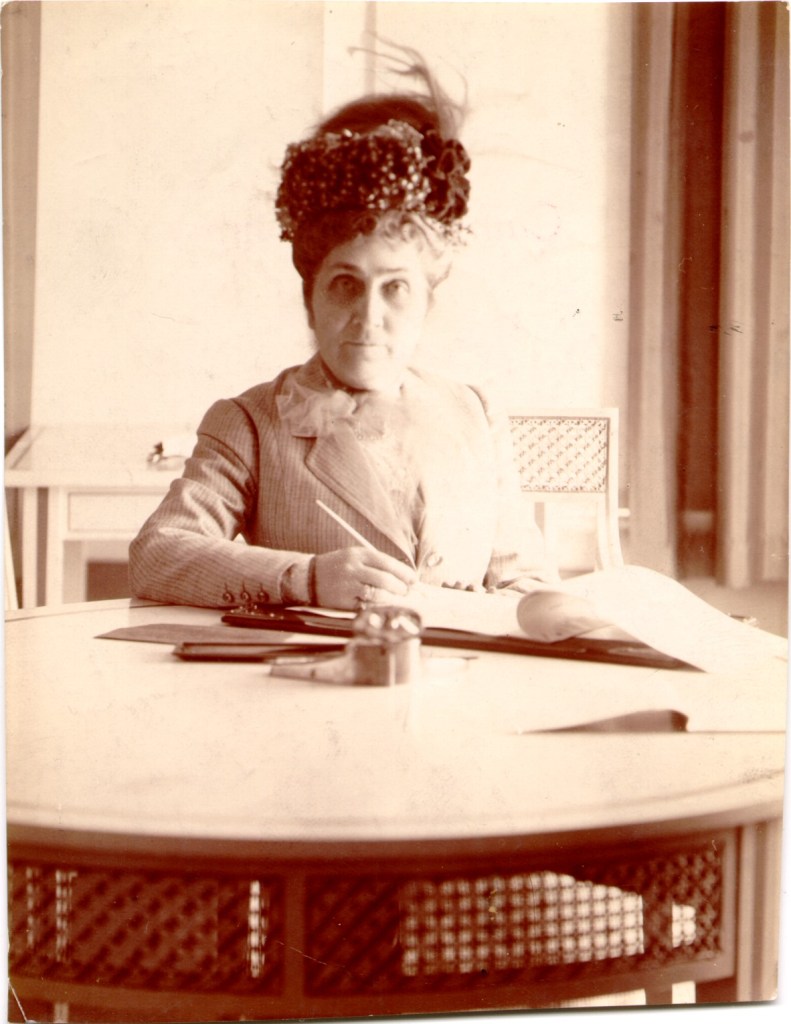
Phoebe Apperson Hearst. Courtesy San Francisco History Center, San Francisco Public Library.
High on the list of influential friends was Elizabeth Ashe. Raised in a wealthy family, she decided to train as a nurse and in 1890 founded a community institution in San Francisco called the Telegraph Hill Neighborhood House, where the poor and new immigrants could get help if they were sick, as well as English lessons and other classes. She knew Dr. Brown through their mutual interest in treating people who didn’t have access to medical care, and told Henry Bothin about Brown’s desire to open a sanatorium. It didn’t take long for Bothin to offer up his plot of land.
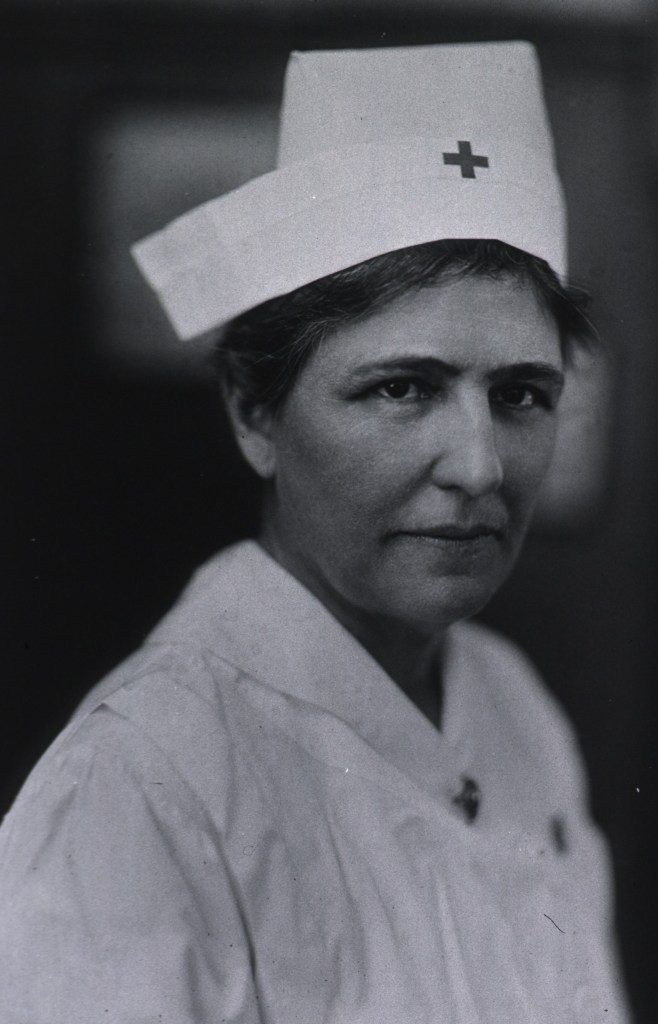
Elizabeth Ashe.
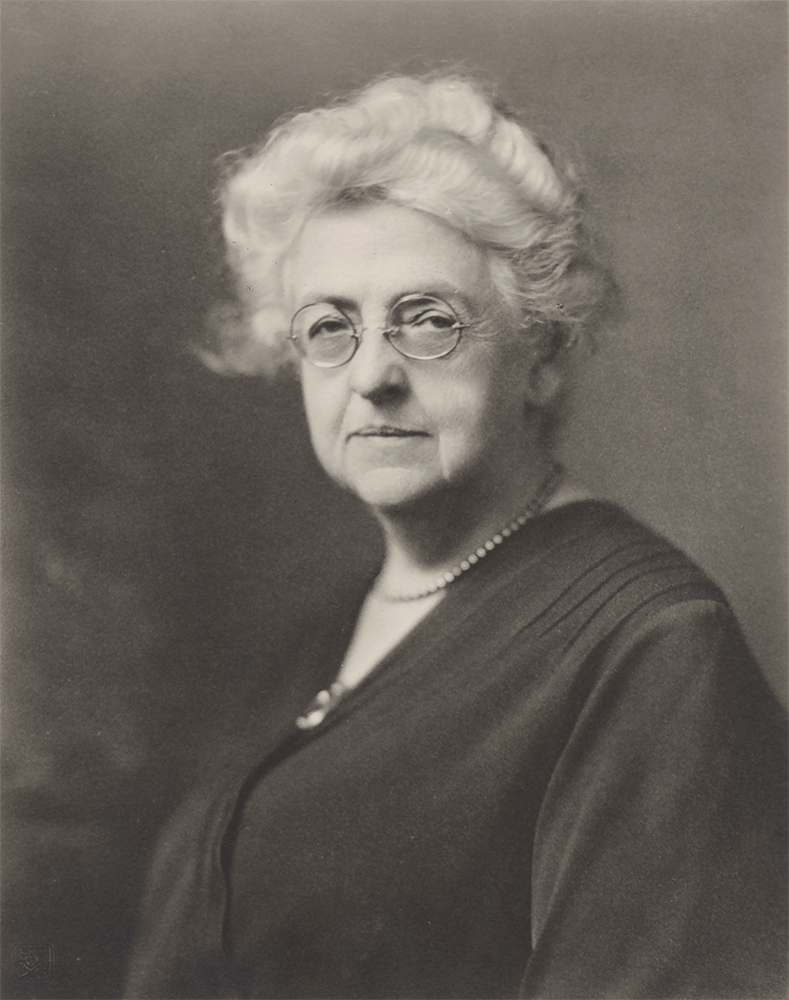
Dr. Adelaide Brown. Courtesy Lane Medical Library, Stanford University.
Dr. Brown also had the support of his sister, the formidable Dr. Adelaide Brown. Like her mother and brother, she chose to go into medicine, and one of her greatest contributions as a physician was increasing the safety of San Francisco’s milk supply. When Arequipa had its own dairy, she regularly tested the cows, which could also carry tuberculosis. (If you’d like to know more about this amazing woman, visit the online exhibit created by the Lane Medical Library at Stanford: https://laneguides.stanford.edu/adelaide-brown)
Society women in San Francisco, Marin, and Santa Barbara also came forward to offer financial assistance. Among them were Mary Raymond, Jeannette Jordan, Isabel Dibblee, and Blanche Wormser.
Mary Raymond was the daughter of George Perkins, the president of the B.F. Goodrich company, and she and her husband Charles met Philip and Helen Brown in Santa Barbara, where the Browns had a small sanitarium and a second home. The Raymonds were a power couple who regularly gave dinner parties for people like Clementine Churchill, wife of Winston Churchill, and Thomas and Mina Edison. In early 1911 Mary gave Dr. Brown $2,000 to help get Arequipa open (that’s about $70,000 today).
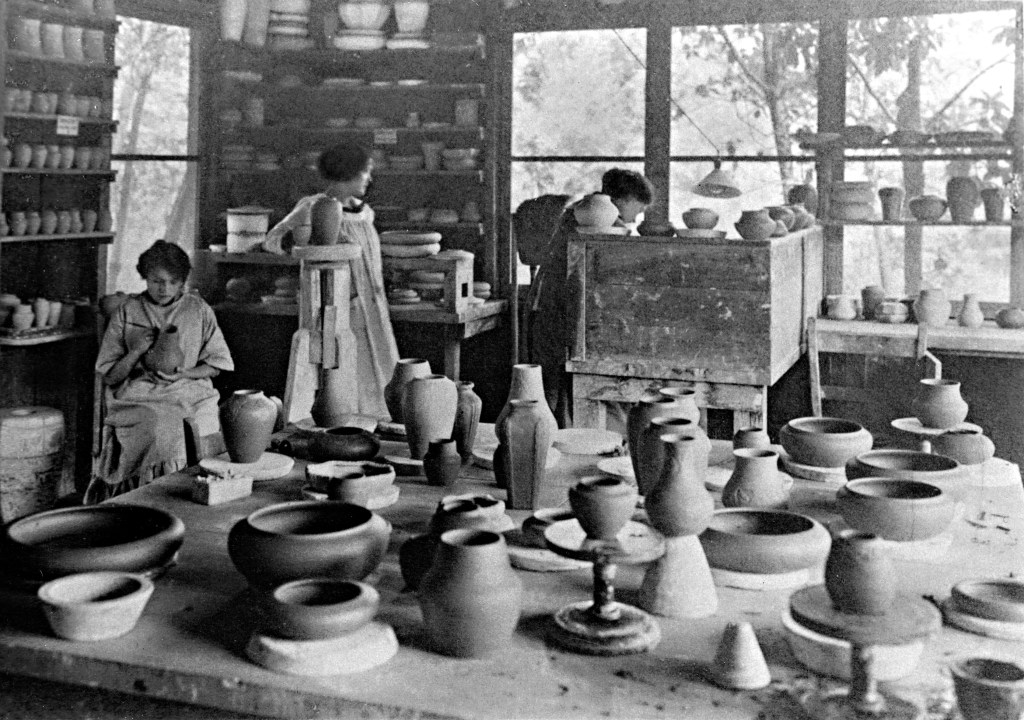
In 1916 Mary took a table at a World War I fundraiser in Santa Barbara, where she sold pieces of Arequipa pottery, made by patients at the sanatorium since 1912 as occupational therapy. Sales of the vases and bowls usually went back to the patients themselves, but they often donated their work for benefits like this one.
Jeannette Jordan was the wife of James C. Jordan, and the Boston couple had moved to San Francisco around 1910. Jordan died soon after, possibly of tuberculosis, and Jeannette gave Dr. Brown $2,500 in August of 1911, though how they met is still a mystery.
Isabel Dibblee came from a wealthy Marin County family, and her mother was a close friend of Elizabeth Ashe. When Dr. Brown wrote and asked for her help in buying furniture or linens for Arequipa, she replied:
It will be a great pleasure to do what I can toward the furnishing of your Sanitarium and I am so glad that you called upon me for I have been greatly interested in this new enterprise.
And finally, we come to Blanche Wormser. She was one of Arequipa’s greatest benefactors. Her husband Samuel was a co-founder of Sussman, Wormser & Co., later known as S&W Fine Foods.
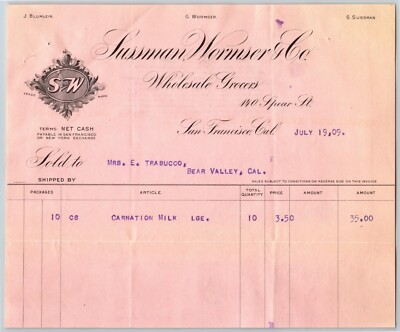
The Wormsers likely gave financial help as Arequipa was getting off the ground, but Blanche’s most meaningful contribution was her time: she served on the board of managers, regularly visited patients and gave them books, linens, and other gifts, and pushed Dr. Brown to hire a social worker. At her death in 1924, Dr. Brown wrote:
Her loss to the Sanatorium is inestimable. Her keen interest was inspiring while she was here and will continue to be an influence during the lifetime of her fellow workers and the patients whom she befriended.
And in a way, she was also an influence on my life. My grandmother, Lois Bonsey Downey, contracted TB in 1927 and spent 14 months at Arequipa before being well enough to return to her husband and son (my dad). She never met Blanche, but Grandma knew how much she had done for Arequipa’s patients. From the day she left the sanatorium at age 24 until her death at age 102, my grandmother bought only S&W canned fruits and vegetables.
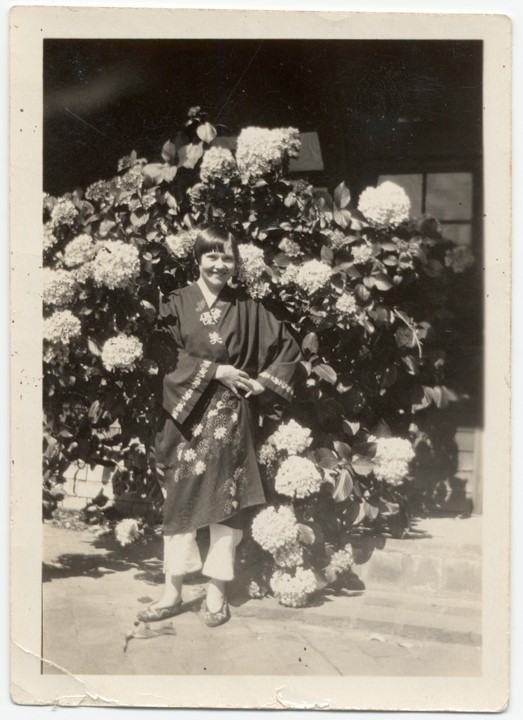
Lois Downey at Arequipa, 1929.
I think about Arequipa frequently, and especially on anniversaries like today. Dr. Philip King Brown, the son and brother of influential female physicians, knew that women were essential to moving medicine forward. He counted on the ones in his social and medical circles to help him create a place where women could be healed of a deadly disease, and they didn’t let him down.
 Tumblereads: A New Twist on the Old West
Hi Lynn, That was truly fascinating! Thanks for sharing it. I tried to comment, but WordPress wouldn’t let me so I wanted you to know. Hope you’re well. Best, Roccie
>
LikeLike
Hi Roccie! I got your comment, thank you so much. Hope all is well in your world.
LikeLike